I am not a difficult patient; I choose to be an informed one.
I noted in a previous article that if I did my life over again, I would have been a functional health doctor. Considering the collection of health problems I am dealing with now, I meant every word of it.
I participate in the Western medical system. I take prescribed medication, get bloodwork and go to doctors when I need medical care. But I am not stupid enough to believe that an industry making billions from chronic illness has no financial interest in keeping people dependent on pharmaceuticals.
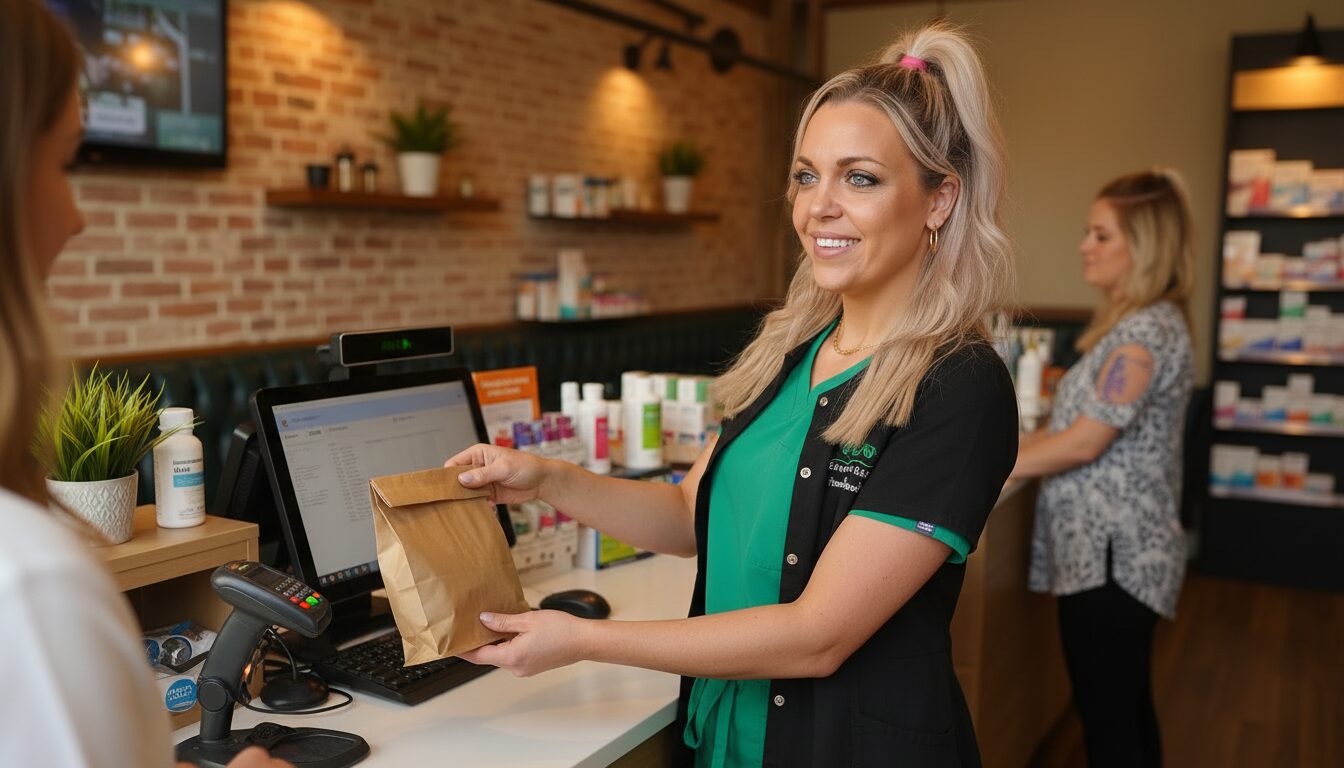
I also worked inside that industry as a pharmacy technician.
You could call me the pharmacy technician gone rogue.
Apparently, Asking for a Blood Test Means I Need a Psychiatrist
About 12 years ago, I started oil pulling. If you have never heard of it, you put coconut oil in your mouth, swish it around for 15 or 20 minutes and then spit it out.
People use it for oral hygiene, fresher breath and whiter teeth. I had been doing it for a while when the coconut oil suddenly started tasting like I was chewing on a ball of aluminum foil.
The metallic taste bothered me, so I did what people do when something strange starts happening inside their own body: I researched it.
I started reading about heavy-metal toxicity and checked several of the symptom boxes. I went to my primary-care doctor and asked him to test my aluminum level.
He looked me directly in the face and told me I needed a psychiatrist.
Not a blood test.
Not a conversation.
A psychiatrist.
I said, “Humor me, please.”
So he ordered the test.
It turned out that my aluminum level was elevated enough to be classified on my results as an overdose or poisoning. It was not high enough to require chelation, but it was elevated enough that it could affect me.
I didn’t feel good about being right.
I felt angry that I had been dismissed and insulted before anyone bothered to check.
And the question I still ask myself is: Why am I going to the same man 12 years later?
I should have left then.
Aluminum Is Not Just in Deodorant
Most of us know aluminum can be found in antiperspirants, which is why I stopped wearing conventional deodorant for years. When I eventually started using it again, I chose an aluminum-free version.
But aluminum compounds are not limited to deodorant.
They can also be found in cosmetics, where certain ingredients help control sweat, oil, texture or color. They appear in some baked goods, including certain store-bought muffins, depending on the leavening agents used. Sodium aluminum phosphate can be used in baking powders and processed baked products. Some tortillas contain aluminum-based leavening ingredients too, which is one reason I started reading labels and buying the more authentic Mexican brands that did not list them.
“Alum” is exactly what it sounds like when you see it listed in products such as some pickles. Aluminum lake dyes are used to create colors in certain foods, medications and cosmetics. We cook with aluminum pans, wrap food in aluminum foil and encounter aluminum compounds in more places than many people realize.
And yes, aluminum sulfate and certain other aluminum-containing ingredients appear under FDA food-additive and GRAS regulations. GRAS literally means Generally Recognized as Safe under the intended conditions of use.
But here is where my concern comes in: “generally recognized as safe” does not mean every person has the same total exposure, absorbs the same amount or responds identically. It does not mean we should stop asking questions about cumulative exposure from food, cosmetics, cookware, medications and the rest of our environment.
My point is not that every muffin is poisoning someone.
My point is that aluminum compounds are found in far more places than most consumers realize, and I had an abnormal laboratory result after my doctor suggested the problem was psychiatric.
That should matter.
Once You Have a Mental-Health Diagnosis, Everything gets blamed on it
Once bipolar disorder is written in a woman’s medical chart, it can become the lens through which every future concern is viewed.
Fatigue becomes depression.
Pain becomes anxiety.
Brain fog becomes emotional instability.
Research becomes obsession.
Direct self-advocacy becomes “difficult behavior.”
Having bipolar disorder does not mean I am incapable of recognizing a change in my own body. It does not mean every symptom originates in my mind. It does not mean I should be dismissed before a doctor has even investigated what I am saying.
I am not claiming I can diagnose myself correctly every time.
I am saying I live in this body every hour of every day.
I know when something is not right.
The First Medication Changed My Body for Years
The first psychiatric medication I was ever prescribed was Zyprexa. I would recommend this drug to absolutely NO ONE! EVER.
I gained approximately 100 pounds in one year.
I read an article claiming this drug could cause weight gain for up to two entire YEARS after the patient comes off of it. Talk about a metabolism killer!
I went into another male doctor’s office (psychiatrist) crying because I was gaining so much weight and felt like a stragner everytime I saw my reflection. I asked him to take me off it.
He refused.
Refused.
There are numerous psychiatric medications and combinations available, yet this doctor acted as though I had no authority over what was happening to my body.
I the developed hypothyroidism. In case you don’t know, your thyroid IS where the control of your metabolism reigns. I take medication for it, so it’s “supposed” to be acting normal, yet I still struggle tremendously to lose weight. I cannot prove that Zyprexa caused my thyroid condition, but I can tell you exactly when the massive weight gain began—and I have lived with the consequences ever since.
Medication can save lives. Medication can also cause life-altering side effects.
Both things can be true.
Why should a patient have to choose between treating her mind and feeling at home in her own body without even being allowed to discuss another option? When that was literally the very first. It wasn’t like I had exhausted every other method out there by that point. I am still mad about it to this day.
Narcolepsy Is Not an Excuse
Then there is narcolepsy.
Narcolepsy is not just being tired. It is a neurological disorder that disrupts the brain’s ability to regulate sleeping and waking.
No matter how long I sleep, I do not consistently get the deep, restorative, brain-repairing rest my body needs. I can wake up feeling as though a person without narcolepsy has gone three days without sleep.
That sleep debt compiles and compiles.
I have fallen asleep in a restaurant after eating barbecue. I have nearly fallen asleep behind the wheel. It does not matter how many sleep medications I have tried; I still sleep terribly.
My body can decide it is bedtime at noon instead of 10 p.m.
Some days, I do not have the energy to do what needs to be done. I physically cannot force my body to perform like a healthy body.
Then I see those motivational videos of men doing push-ups in the rain, jumping rope at 4 a.m. and jogging up a mountain while someone yells:
Stop making excuses.
Work harder.
Be better.
And I feel like a failure.
I wonder whether people look at me and think I am lazy when, in reality, my brain is fighting to stay awake in the middle of the day.
Sometimes people are making excuses.
Sometimes a person’s body is genuinely unable to do what her mind desperately wants it to do.
Wisdom is knowing there is a difference.
When Every Symptom Overlaps
Now that I am in my forties, I have also been dealing with signs of the menopause transition: hot flashes, insomnia, fatigue, brain fog and a loss of motivation and drive.
Those symptoms overlap with narcolepsy, hypothyroidism, medication side effects and several other health problems. That is exactly why I wanted someone to look at my whole body instead of treating every symptom as an isolated complaint.
I paid out of pocket for functional testing because there is no way I should feel this bad.
The functional-medicine provider told me I had significant inflammation, problems with my adrenal function and low testosterone. He recommended testosterone injections and microdosing a GLP-1 medication.
The bill was almost $1,000.
I am on disability. I do not have $1,000 lying around for treatment that normal insurance refuses to cover.
I took the results to my primary-care doctor and asked whether he could prescribe the testosterone.
He refused.
I understand that a doctor is not obligated to prescribe every medication a patient requests. But if the answer is no, explain why.
Why did one provider believe testosterone might help while another refused to consider it? Were my results clinically significant? What were the risks? What symptoms could be treated another way? What additional testing did I need? What affordable alternatives were available?
And yes, it does make me angry to believe that if I walked into the same office saying I wanted testosterone as part of a gender transition, my request might be evaluated under an entirely different medical framework.
I know those are not identical clinical situations. I know different diagnoses come with different guidelines. But women in perimenopause and menopause still deserve serious, evidence-based conversations about their hormones.
I was not demanding a syringe.
I was asking for a conversation.
Then Came Green Scrub Friday
One day, I went to the emergency room with a friend who had a puncture-type cut on her arm.
I was wearing green scrubs from my pharmacy job. It just so happened to be green scrub Friday at that hospital because every nurse seemed to be wearing the exact same color.
After sitting in the emergency department for hours without being seen, I finally spoke up.
“Hey, we still haven’t been seen. If I had known it was going to take this long, I would have at least poured hydrogen peroxide on the wound before we left the house.”
The woman said someone would be right in.
Very quickly, another nurse came in with saline solution to clean the wound. But before she did anything, she grabbed a bottle of hydrogen peroxide, turned toward me and asked, “Would you like me to put this on it first?”
That was the exact moment I realized they thought I was a nurse.
Well, they thought the shoe fit, so I laced that bitch up and wore it.
I straightened my posture, looked at her and asked, “What is your normal protocol?”
She said, “We do not normally use it.”
Internally, I was freaking out.
Then why in the hell did you bring it in here? Only because I mentioned it?
But outwardly, I kept my newly acquired medical-professional posture and said, “Just follow your normal protocol.”
I never told anyone I was a nurse. I was not wearing one of their badges. They saw green scrubs and made an assumption.
Then, because it was a puncture-type wound, they recommended a tetanus vaccination.
I asked whether it was a tetanus-only shot or Tdap—the three-in-one vaccination for tetanus, diphtheria and pertussis, also known as whooping cough.
They said Tdap.
Then say that. Tell people exactly what you are offering them.
I had read books about vaccines and reviewed several manufacturer inserts. It had been a while since I studied the subject, so I asked the physician assistant a sincere question:
“Please help me make an informed decision. I thought tetanus grows in an anaerobic environment.” Meaning: since the wound bled and blood is oxygenated, the risk should be to a bear minimum.
I was not being combative.
I was asking a medical professional to help me understand.
I also texted two pharmacists I trusted. Both gave the standard recommendation: If it had been more than 10 years, she should receive the vaccination.
But the physician assistant did not calmly explain why puncture wounds can still create conditions where tetanus becomes a concern. She described what could happen, told me the lungs would eventually stop working and then loudly and directly declared:
“And you will DIE.”
Then she looked at me like I was a piece of toilet paper stuck to her shoe and added, “And you should know.”
Excuse me?
Why should I know?
I never claimed to be a nurse. I was not wearing a hospital identification badge. They assumed I had years of nursing education because my scrubs happened to match theirs on green scrub Friday.
When she asked whether my friend wanted the shot, I initially said no with my rbf because I was pissed at the way she handled that and we needed time to think and talk about it. After both pharmacists recommended it, I told my friend she should probably go ahead and receive it.
The problem was not that the hospital recommended a tetanus vaccination.
The problem was that when I asked for help making an informed decision, I received fear, condescension and humiliation instead of information.
That is not informed consent.
I Have Seen the Money Up Close
My distrust did not come solely from internet videos.
From approximately 2004 to 2006, I worked as a waitress in upscale dining. Medical professionals would gather in a private upstairs dining area for what we called pharmaceutical parties.
A pharmaceutical sales representative would give a PowerPoint presentation about a drug—what it did and who it was for—while treating doctors to lavish dinners.
We are talking $70 steaks in the early 2000s, seemingly unlimited glasses of $11 chardonnay and dinner bills that could reach thousands of dollars. Sometimes someone would request a filet mignon to take home to their dog.
There would be branded promotional gifts too: pens, keychains and, on one memorable occasion, a Viagra keychain—because apparently that was something the world needed.
I even overheard people discussing how one of those little gifts helped someone get a better seat on a flight.
Years later, when I worked in a pharmacy, I saw financial incentives from another side.
Even little old me, the pharmacy technician, could receive a bonus that was influenced by how many vaccinations the pharmacy administered.
I remember a colleague looking through customer profiles to see who had not received a shingles vaccine and trying to schedule them.
Those calls were not happening because she had suddenly become personally worried about every customer’s risk of shingles.
We wanted to hit the goal and increase the bonus.
That does not automatically mean a vaccine or medication is unnecessary. It means the financial incentive should be disclosed.
If a UGC creator or influencer earns a commission from recommending a product, she is expected to tell her audience that she is an affiliate. Why should financial transparency become less important when the product being promoted goes inside someone’s body?
Healthcare decisions should be based on the patient’s needs—not a sales quota, corporate target or bonus.
Research Is Not the Enemy
The internet contains misinformation. It contains fearmongering, fabricated claims and people trying to sell miracle supplements to desperate patients.
The medical industry also contains financial conflicts, rushed appointments, human bias and professionals who sometimes get things wrong.
We should be honest about both.
Doing your own research should not mean diagnosing yourself from one 60-second video or buying whatever supplement happens to be trending.
It should mean reading, comparing sources, reviewing medication inserts, learning enough to ask better questions and taking an active role in decisions about your body.
Patients can misunderstand research.
Doctors can miss symptoms.
Both are human.
The answer is not blind obedience to the medical establishment, but it is not blind obedience to a wellness influencer either.
The answer is better questions, better evidence, transparency and doctors who are secure enough in their knowledge to explain themselves without humiliating a patient.
I Want the Root, Not Another Bandage
People living with multiple chronic conditions are tired.
We are tired of being passed from one specialist to another while no one looks at the whole person.
We are tired of paying out of pocket for testing because insurance will not cover functional or holistic care.
We are tired of being handed another prescription without understanding why the underlying problem exists.
We are tired of taking one medication and then needing another one to manage its side effects.
Most of all, we are tired of being labeled difficult when we arrive prepared with direct questions.
I am not asking a doctor to obey me.
I am not claiming everything I read online is true.
I am not rejecting every medication, vaccination or conventional treatment.
I am asking for something much more reasonable:
Listen before deciding who I am.
Explain before dismissing me.
Investigate before blaming every symptom on anxiety.
Show me the evidence behind your recommendation.
Tell me the benefits, risks and alternatives.
If you do not know, say you do not know.
If you believe I am wrong, teach me without humiliating me.
Patients bring the lived knowledge of their bodies. Medical professionals bring education, clinical experience and diagnostic tools.
Good healthcare requires both.
Maybe being a pharmacy technician gone rogue simply means I stopped mistaking compliance for wisdom.
I will continue asking questions.
I will continue requesting tests when I have a rational reason for doing so.
I will continue advocating for myself, even when my directness makes someone uncomfortable.
Because I am not a difficult patient.
I am an informed one.
And I still deserve to be heard.
Comments >>